
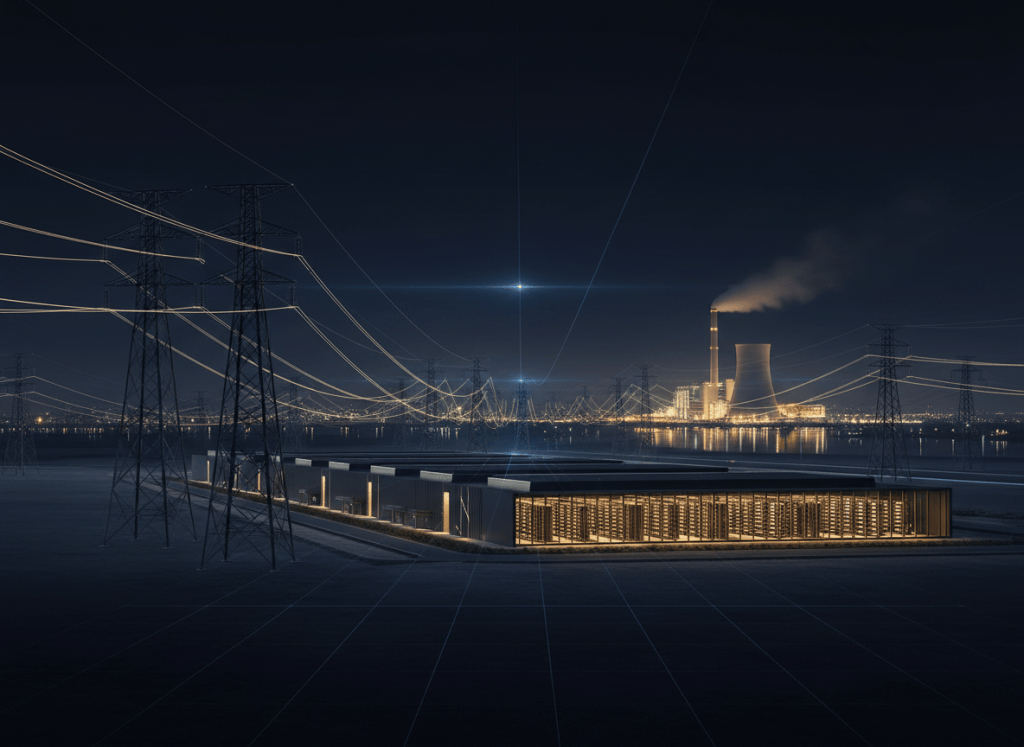
Artificial intelligence is usually discussed as a software revolution. But the race to build larger models is increasingly becoming a story about electricity, data centers, grid capacity and the companies that control physical infrastructure.
AI is becoming an electricity story
Modern AI systems require enormous computing capacity, and that compute is concentrated inside power-hungry data centers. The International Energy Agency projects global data-center electricity consumption to roughly double by 2030 in its base case, with AI-focused facilities growing considerably faster than conventional server demand.
In the United States, the pressure is even more visible. The Electric Power Research Institute estimates that data centers could account for roughly 9% to 17% of U.S. electricity consumption by 2030, up from about 4% to 5% today. That range is wide because the pace of AI adoption, efficiency improvements and grid bottlenecks remain uncertain.
The bottleneck is no longer just chips
For the first phase of the generative-AI boom, investors focused on GPUs and semiconductor supply. The next constraint is broader: access to reliable power, transformers, transmission infrastructure, cooling systems, land and permitting.
That changes who can capture value. Utilities, power producers, grid equipment manufacturers, data-center developers and infrastructure financiers can all benefit when technology companies are forced to spend more simply to secure enough physical capacity to run their models.
Power is becoming a competitive advantage
Technology companies are responding by signing unusually large power agreements, investing directly in generation and working with utilities on new capacity. Google, for example, signed a multi-gigawatt power agreement with Constellation Energy in 2026 as data-center demand intensified.
At the same time, grid operators are trying to prevent data-center growth from overwhelming existing systems. Some proposals would encourage large facilities to bring their own generation, reduce demand during grid emergencies or accept delays before connecting to the network.
Who is really getting rich?
The obvious winners of AI are model developers and chip companies, but the infrastructure layer may be just as important. Every new cluster of advanced servers requires electricity, cooling, networking, construction and financing. Those costs create revenue for an ecosystem that existed long before the current AI boom.
The strongest businesses may therefore be the ones that own scarce inputs rather than the companies making the loudest AI announcements. Access to megawatts, grid interconnections and physical data-center capacity can become a form of pricing power.
The risk investors should watch
The investment case depends on whether AI revenue ultimately justifies the infrastructure being built for it. Data centers are expensive, power projects take years and financing costs matter. If AI demand disappoints, some assets could be left with weaker economics than expected. If demand continues to accelerate, power constraints could become even more valuable.
That tension is what makes the AI power story important: it is no longer simply a question of whether artificial intelligence grows. It is a question of how quickly the physical economy can keep up.

