
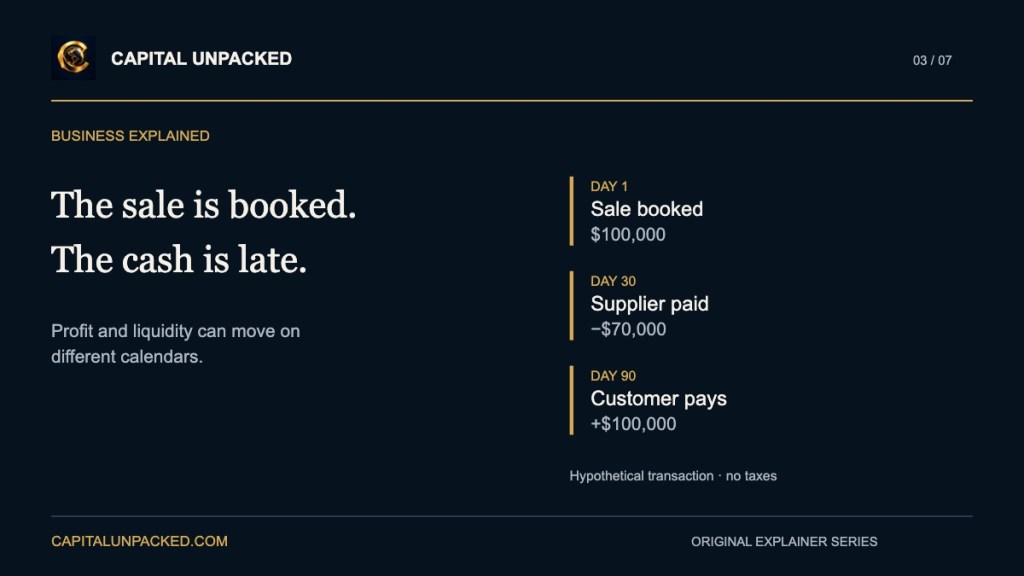
A business sells a service for $100,000, incurs $70,000 of costs and waits three months for the customer to pay. The apparent $30,000 margin does not make the supplier’s payment deadline disappear. Growth can create a cash problem before it creates spendable money.
The SEC distinguishes the income statement, which reports revenue and expenses over a period, from the cash flow statement, which tracks cash movements. The latter separates operating, investing and financing activity. Profit and cash generation therefore need separate checks.
Consider a simplified hypothetical transaction with no taxes or other expenses, assuming the service has been delivered and the revenue recognition conditions are met. The customer pays on day 90. The supplier must be paid on day 30. For 60 days, the company must bridge the $70,000 payment from existing cash or financing. The example is a timing problem, not a claim about any listed business.
If a second identical order arrives before the first customer pays, the funding need can grow. A rising sales chart alone will not reveal whether collections are keeping pace. Conversely, cash received from a new loan can improve the bank balance without demonstrating better operating performance.
When reading an infrastructure or technology company’s results, follow the cash calendar: when is the work billed, when is it collected, and when are suppliers and employees paid? Then distinguish cash earned through operations from cash raised through borrowing or new equity. A useful business explanation connects the sale to the payment, rather than stopping at the revenue headline.
Source: SEC: Beginners’ Guide to Financial Statements. Definitions checked 27 October 2026. Calculations and illustrations by Capital Unpacked.

